405-722-7071

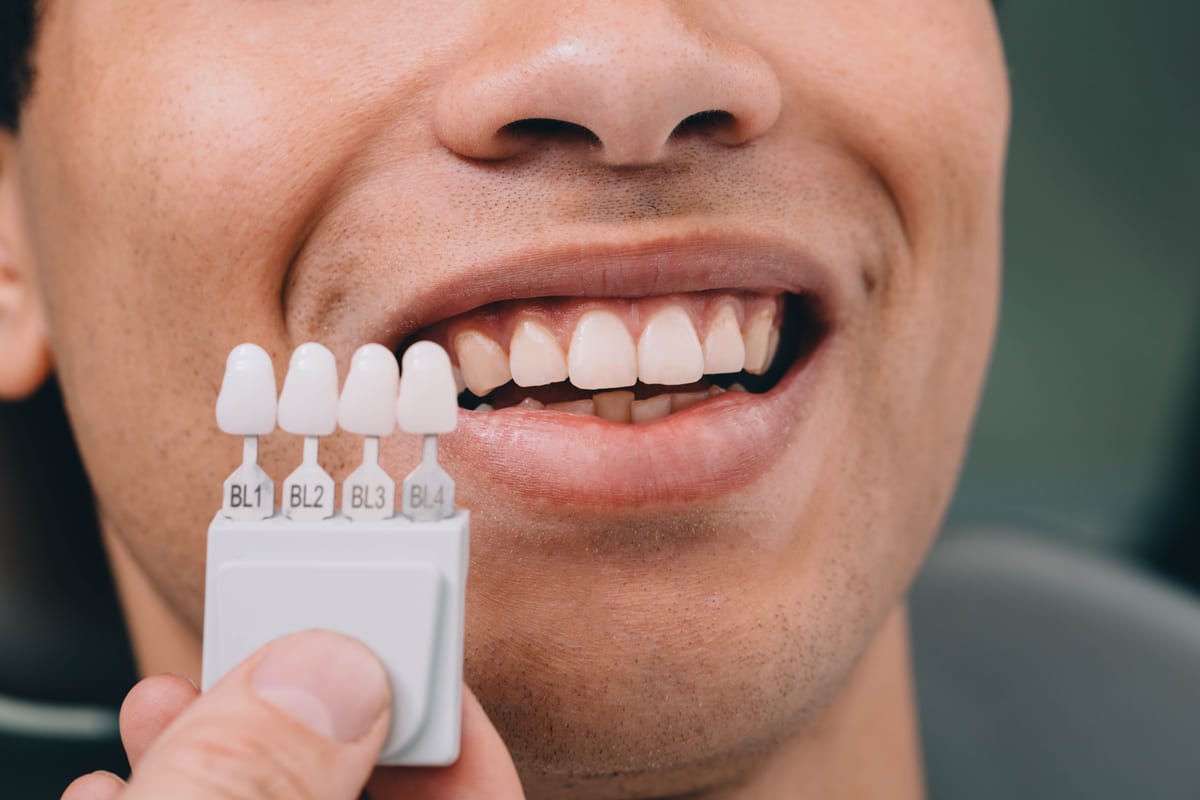
Porcelain or Composite Veneers: Which Actually Lasts Longer
Choosing between porcelain or composite veneers — which actually lasts longer in Oklahoma City — is one of the most common questions Dr. David Lawrence hears at Oklahoma Implant and Sedation Dentistry. Both options can dramatically improve your smile. But they differ in longevity, appearance, cost, and the process involved. Understanding those differences helps you make a confident, informed decision.
What Are Porcelain and Composite Veneers?
Veneers are thin shells bonded to the front surface of your teeth. They cover chips, cracks, stains, gaps, or uneven shapes. Both types serve the same basic purpose — but they are made from very different materials.
Porcelain veneers are custom-crafted in a dental laboratory. Each shell is made from high-grade ceramic that mimics the light-reflecting properties of natural enamel. Composite resin veneers are sculpted directly onto your teeth using a tooth-colored material — the same used in many white fillings.
Neither option is universally better. The right choice depends on your goals, timeline, and budget. Here is a detailed breakdown to help Oklahoma City patients think it through.
Porcelain vs. Composite Veneers: Durability and Longevity in Oklahoma City
Durability is usually the deciding factor for most patients. Porcelain veneers typically last 10 to 20 years with proper care. Some patients keep them even longer. Composite resin veneers generally last 4 to 8 years before needing replacement or repair.
Porcelain is harder and more resistant to staining. It does not absorb coffee, wine, or tobacco the way composite resin can. For Oklahoma City patients who want a long-term solution, porcelain often wins on durability alone.
Composite veneers are more prone to chipping and discoloration over time. However, they are also easier to repair when damage occurs. A chipped porcelain veneer usually requires full replacement. A chipped composite veneer can often be patched chairside in a single visit.
- Porcelain veneers: 10–20 year lifespan on average
- Composite veneers: 4–8 year lifespan on average
- Porcelain resists staining better over time
- Composite is easier and faster to repair
- Both require good oral hygiene to reach their full lifespan
Aesthetics: Which Veneer Looks More Natural?
Porcelain veneers are widely considered the gold standard for natural appearance. The ceramic material reflects light similarly to real tooth enamel. This creates a depth and translucency that composite resin struggles to replicate.
Composite veneers can look very natural — especially right after placement. A skilled dentist like Dr. David Lawrence can sculpt composite material to blend beautifully with surrounding teeth. Over time, though, composite may dull or discolor more noticeably than porcelain.
If a flawless, long-lasting aesthetic result is your top priority, porcelain is typically the stronger performer. For patients who want a quick cosmetic improvement without heavy investment, composite can be an excellent short-term or budget-conscious option.
The Procedure: What to Expect With Each Option
The process for each veneer type differs significantly. Understanding what is involved helps you plan accordingly.
Porcelain veneer process:
- Consultation and smile design with Dr. Lawrence
- Enamel preparation — a thin layer is removed from the tooth surface
- Dental impressions sent to a laboratory
- Temporary veneers placed while your permanent ones are crafted
- Final bonding appointment — usually 2 to 3 weeks later
Composite veneer process:
- Consultation to plan shape, size, and shade
- Minimal to no enamel removal in many cases
- Resin applied and sculpted directly onto each tooth
- Hardened with a curing light and polished
- Entire process often completed in a single visit
Because porcelain veneers require enamel removal, the process is generally irreversible. You will need veneers — or another restoration — on those teeth going forward. Composite veneers, especially when placed with minimal prep, are often considered a more reversible option.
For patients who experience dental anxiety, Dr. Lawrence offers sedation dentistry to keep the entire experience calm and comfortable. Oklahoma Implant and Sedation Dentistry also handles more complex smile cases that may include Dental Implants Oklahoma City patients need when missing teeth are part of the picture.
Cost Comparison: Porcelain vs. Composite Veneers
Cost is a practical reality for most patients. Porcelain veneers cost significantly more per tooth than composite. This reflects the laboratory fees, materials, and multi-appointment process involved. The exact investment varies based on how many teeth are treated and each patient’s unique case.
Composite veneers carry a lower upfront cost. However, they may need replacement sooner — which can add up over time. When you factor in the longer lifespan of porcelain, the cost-per-year difference often narrows considerably.
- Porcelain: higher upfront cost, longer lifespan
- Composite: lower upfront cost, shorter lifespan
- Long-term value often favors porcelain for permanent results
- Composite may be better for patients wanting low commitment
- Both options are discussed in detail at your consultation
Our Dental Assistant Team Member Oklahoma City professionals are here to walk you through all aspects of your treatment plan — including what each option involves from start to finish.
Which Veneer Is Right for You?
There is no single correct answer. Porcelain or composite veneers — which actually lasts longer in Oklahoma City — depends on what matters most to you. Longevity and appearance favor porcelain. Convenience, repairability, and lower upfront cost favor composite.
Some patients choose composite first as a trial run. Others go straight to porcelain for a permanent transformation. Dr. David Lawrence evaluates each patient’s teeth, goals, and lifestyle before making a recommendation. The goal is always to match the right solution to the right person.
If you are ready to explore your options and find out which veneer suits your smile, our team at Oklahoma Implant and Sedation Dentistry is here to guide you every step of the way. Book Now to schedule your appointment with our team.
Frequently Asked Questions
How long do porcelain veneers last compared to composite?
Porcelain veneers typically last 10 to 20 years with good care. Composite resin veneers usually last 4 to 8 years before needing replacement or repair. Proper brushing, flossing, and regular dental visits help both types reach their maximum lifespan.
Can composite veneers be repaired if they chip?
Yes — one of the biggest advantages of composite veneers is repairability. A chipped or damaged composite veneer can often be repaired chairside in a single appointment. Porcelain veneers, by contrast, usually require full replacement if they chip or crack.
Do veneers look natural on teeth?
Both porcelain and composite veneers can look very natural when placed by an experienced dentist. Porcelain tends to have a slight edge in mimicking the light-reflecting quality of real enamel. Composite can also look excellent — especially immediately after placement.
Is the veneer procedure painful?
Most patients experience little to no discomfort during the veneer process. Local anesthesia is used during enamel preparation. For patients with dental anxiety, sedation options are available at Oklahoma Implant and Sedation Dentistry to keep the experience relaxed and comfortable.
Are veneers reversible?
Composite veneers placed with minimal preparation are generally considered more reversible. Porcelain veneers require removal of a thin layer of enamel, making them a permanent commitment. Once enamel is removed, the tooth will always need a restoration. Dr. Lawrence will discuss this in full during your consultation.