405-722-7071


How to Clean Implant Dentures Properly
Getting implant-supported dentures is a considerable investment in your comfort, your ability to eat the foods you enjoy, and your long-term oral health. Most patients put a lot of thought into the decision to get them. Far fewer think carefully about what comes after: specifically, how to keep them clean so they last as long as possible and continue to function well.
Cleaning implant dentures is different from caring for natural teeth, and it’s different from cleaning traditional removable dentures, too. The implants anchoring them in place require attention, and the denture itself needs a cleaning routine that protects both the prosthetic material and the soft tissue around it. Here’s a practical, straightforward guide to getting it right.
Why Cleaning Implant Dentures Requires a Different Approach
Traditional dentures sit on the gum and can be removed for a full soak overnight. Implant-supported dentures (fixed or permanent options) are anchored to the implants and may not be removable at home. Even snap-in overdentures, which can be removed, connect to metal abutments that protrude from the gum line and harbor bacteria in ways standard denture cleaning doesn’t address.
The real concern isn’t just keeping the denture looking good. It’s preventing peri-implantitis – a bacterial infection around the implant site that can destroy the bone supporting the implant and ultimately cause implant failure. According to a 2022 review in the Journal of Clinical Periodontology, peri-implantitis affects an estimated 22 percent of implant patients. Consistent, proper cleaning is the most effective prevention available. Patients who receive implant dentures in Oklahoma City at Oklahoma Implant & Sedation Dentistry receive detailed cleaning instructions based on the prosthetic type, as the right approach depends on whether you have a snap-in overdenture or a fixed implant bridge.
Cleaning Snap-In (Removable) Implant Overdentures
Snap-in overdentures clip onto implant attachments and can be removed daily for cleaning. That removability is an advantage – it allows you to thoroughly clean both the denture and the implant abutments.
The daily routine for the denture itself
Remove the denture every night. Rinse it under running water to clear loose debris, then brush it with a soft-bristled denture brush and a non-abrasive denture cleaner. Standard toothpaste is too abrasive for most denture materials and will scratch their surfaces over time, creating microscopic grooves where bacteria can accumulate. Avoid hot water, which can warp the acrylic. Store the denture in clean water or a denture-soaking solution overnight rather than leaving it dry, which can make the material brittle.
Cleaning the abutments and surrounding gum tissue
This is the step most people miss, and it’s the most critical for implant health. With the denture removed, use a soft toothbrush or a dedicated implant-cleaning brush to gently clean around each abutment (the metal post that protrudes from the gum). Gently brush the tissue around the abutment to remove any biofilm buildup. An antimicrobial rinse, such as chlorhexidine gluconate (used as directed by your dentist), can help reduce the bacterial load around the implant sites.
Interdental brushes (small cylindrical brushes that fit between implant components) are particularly effective for cleaning around abutments and the underside of the denture where it meets the gum. Water flossers are another good option; they’re gentle on tissue and can flush debris from areas that brushes can’t reach.
Cleaning Fixed Implant Bridges (Non-Removable)
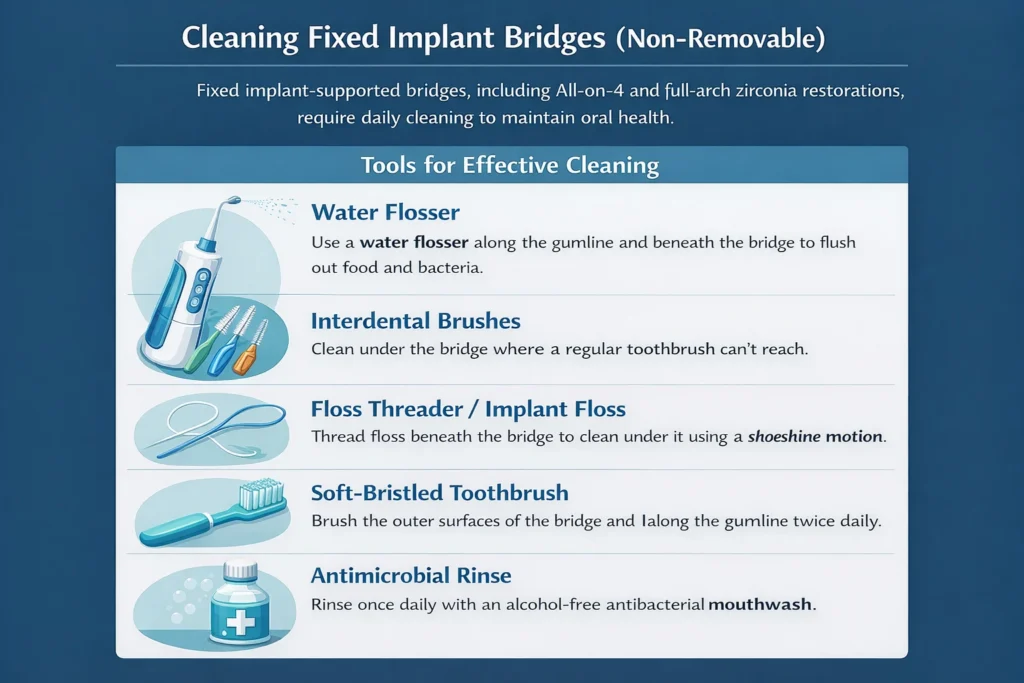
Fixed implant-supported bridges, including All-on-4 and full-arch zirconia restorations, are permanently attached and can only be removed by a dentist. Cleaning them requires getting beneath and around the bridge every day, without the ability to remove the prosthetic.
Tools that make a real difference
- Water flosser: Arguably the most important tool for fixed bridge patients. Direct the stream along the gumline and beneath the bridge to flush out food debris and bacteria. Use it at least once daily.
- Interdental brushes: These reach under the bridge where a regular toothbrush can’t. Work them gently back and forth along the gumline on both sides of the bridge.
- Floss threader or implant floss: Traditional floss can be threaded beneath the bridge using a floss threader, then moved in a shoeshine motion along the gum and implant surface.
- Soft-bristled toothbrush: Brush the outer surfaces of the bridge twice daily, angling bristles slightly toward the gumline.
- Antimicrobial rinse: Rinsing once daily with an alcohol-free antibacterial mouthwash helps reduce bacterial levels throughout the mouth.
What to avoid with fixed bridges
Do not use abrasive toothpastes, baking soda, or whitening products on zirconia or acrylic bridge materials. Avoid using metal instruments to dislodge debris — they scratch the surface. Skip alcohol-based mouthwashes if the packaging doesn’t specifically say they’re safe for implants, as alcohol can dry out oral tissue over time.
Professional Cleanings: Why They’re Non-Negotiable
Home care handles the daily maintenance, but professional cleanings catch what you miss and address the buildup that home tools can’t remove. Your dentist or hygienist will use instruments designed for implants — plastic or resin scalers rather than metal ones, which can scratch the implant surface and make it harder to keep clean.
Most implant patients benefit from professional maintenance visits every three to four months rather than the standard twice-yearly schedule, particularly in the first couple of years after placement. Your provider will assess the health of the tissue around each implant, check for any early signs of peri-implant inflammation, and adjust your home care routine if needed.
Implant Denture Care in Oklahoma City
Dr. David Lawrence and the team understand that the success of an implant restoration depends not just on the surgery but also on what happens in the months and years that follow, including how consistently and correctly patients care for their implants at home. A patient who properly cleans their implant denture every day dramatically extends its lifespan and reduces the risk of complications that can lead to costly revisions.
Have Questions about your implant denture care routine?
Schedule a follow-up or consultation at Oklahoma Implant & Sedation Dentistry in Oklahoma City. Dr. Lawrence and the team will review your current routine, demonstrate proper prosthetic techniques, and ensure your implants remain healthy over the long term.
People Also Ask
How do you know if something is wrong with your implants?
Warning signs include persistent tenderness, bleeding when cleaning around the implant, visible swelling of the surrounding gum tissue, or a loose feeling in the prosthetic. Any of these should prompt a same-day call to your dental provider – early intervention prevents significant bone loss.
Does diet affect how long implant dentures last?
Yes. Excessively hard foods, like ice, hard candy, or very tough cuts of meat, can chip or crack the prosthetic material over time. Sticky foods can stress the attachment components of removable overdentures. Most patients with implant dentures eat a much more varied diet than with traditional dentures, but some awareness of food hardness remains relevant.
How often should implant dentures be professionally checked?
Most implant patients benefit from checkups every three to four months in the first year or two, then every six months once stability is confirmed. Your provider will examine the implant sites, check the prosthetic for wear, and professionally clean areas you can’t reach at home.
Can you soak implant-supported dentures in denture cleaner overnight?
Removable snap-in overdentures can typically be soaked in a denture-cleaning solution overnight. Fixed implant bridges cannot be removed, so soaking isn’t applicable. Always confirm with your dentist which cleaning products are appropriate for your specific prosthetic material.